
SPARK CONVERSATIONS
‘Keep an open mind – otherwise you'll miss out on too much in life.’
In conversation with Kathrin Weber and Axel Anderl
By Mark Alexander Grübbeling
December 1st, 2025

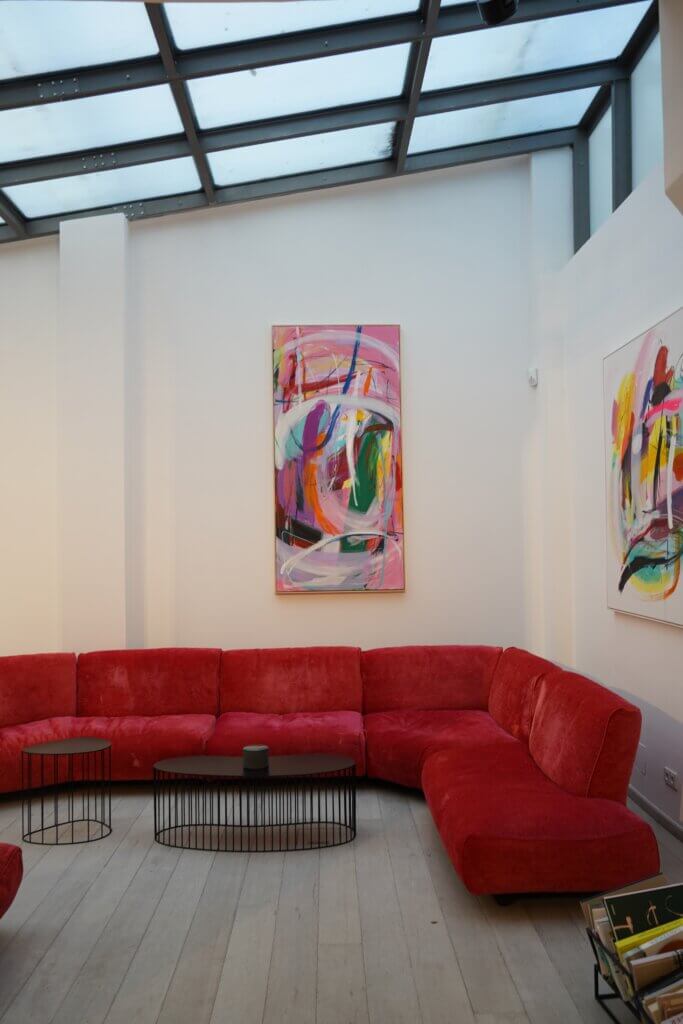
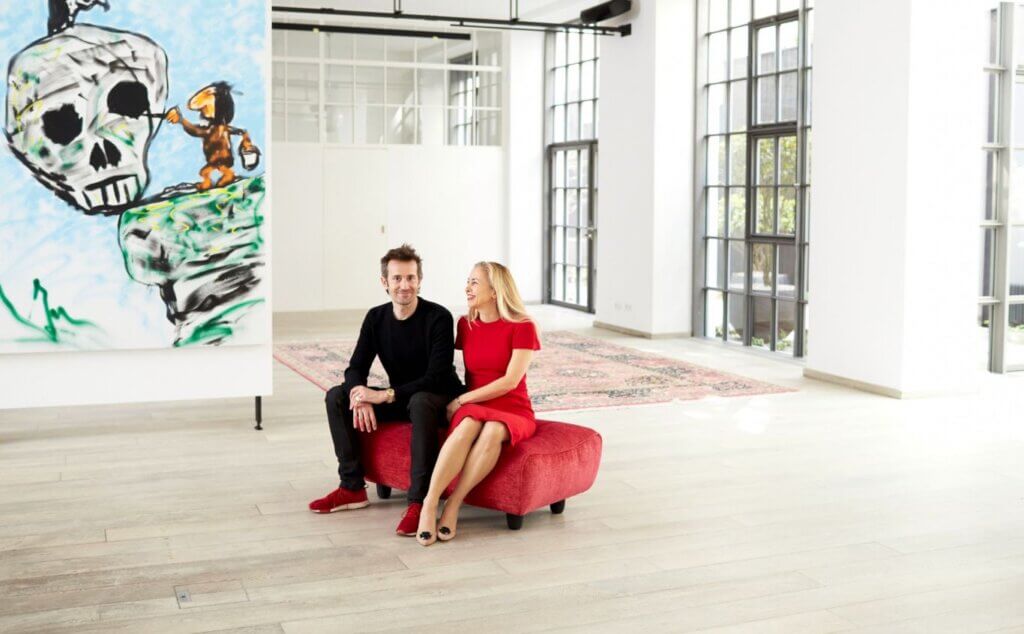
On an autumn day that Rilke himself could not have described better, I stroll down Vienna’s avenues to visit the collector couple Kathrin Weber and Axel Anderl.
With the founding of Art Spaces Vienna, they have opened their collection and taken the step towards public responsibility. Their spaces are a platform, a salon that seeks dialogue, where artists meet art lovers and demonstrate the courage to institutionalise the private. They have just shown Violetta Ehnsperg, who shone at SPARK this year and has now been named a ‘Chanel Artist’. Axel Anderl and Kathrin Weber are both successful lawyers: in conversation and in the field of tension between law and order and art and riot.
SPARK: Mr Anderl, how did you both get into art?
Axel Anderl: These were two different paths that eventually converged. It should be noted that we have been a couple for 33 years. Kathrin was raised with a strong affinity for art. She took me to museums early on in our relationship. At that point, I had not yet developed a passion for art. That came 20 years ago when I took over as head of the IT/ IP team at DORDA. I came into contact with museums, but also with artists such as Herbert Brandl and Erwin Wurm. The glimpse behind the scenes and the collaboration with outstanding personalities from the art world opened my eyes and sparked my interest in the visual arts. This very quickly led to collecting.
SPARK: When did your shared passion become the need for a space like Art Space?
Kathrin Weber & Axel Anderl: About eight years ago, we started to run out of wall space for our collection. Two offices and our home were already very full. Collecting for storage was not an option for us. So we were faced with the choice of either stopping collecting or creating an exhibition space for our collection. We decided on the latter, but it took us a good three years to find the right location.
SPARK: Thank you for having me here today. You have also created a space for encounters here. How much has this changed the identity of your collection – your willingness to take risks, your narrative?
Kathrin Weber & Axel Anderl: The idea of creating an exhibition space for our collection ultimately evolved into a completely different concept: after adapting the premises, we decided to exhibit artists who are represented in our collection. This allows us to indirectly showcase our collection and give our friends low-threshold access to the artists outside of the gallery setting. The whole thing takes place in the spirit of a Viennese salon, where selected guests visit the exhibition in a small setting and meet the artists present. This has sparked a dynamic of its own: the artists we have collected have networked with each other, and connections have also been formed among the guests. As a result, our collection has become something very lively.
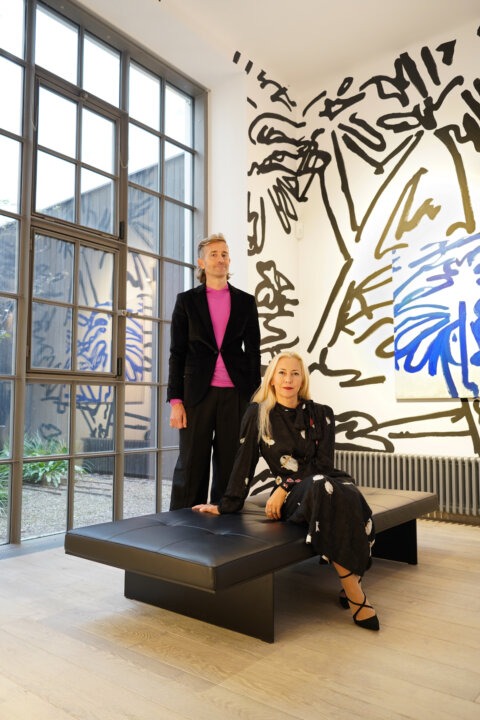
SPARK: I am currently reading Rilke’s letters to a young poet. I think the following excerpt fits this space in the salon. ‘Things are not as tangible and expressible as we are usually led to believe; most events are inexpressible, taking place in a space that no word has ever entered, and more inexpressible than all of them are works of art, mysterious existences whose lives continue alongside our own, which pass away.’ – Rainer Maria Rilke, Letters to a Young Poet
Is this visibility perhaps nevertheless the ultimate form of appreciation for artists?
Kathrin Weber & Axel Anderl: For us, visibility of art is a must. Even if you have purchased a work, we believe that you have no right to monopolise it or withdraw it from the market. That is our deepest conviction and the driving force behind our model. Of course, this goes hand in hand with a high appreciation for artistic creation.
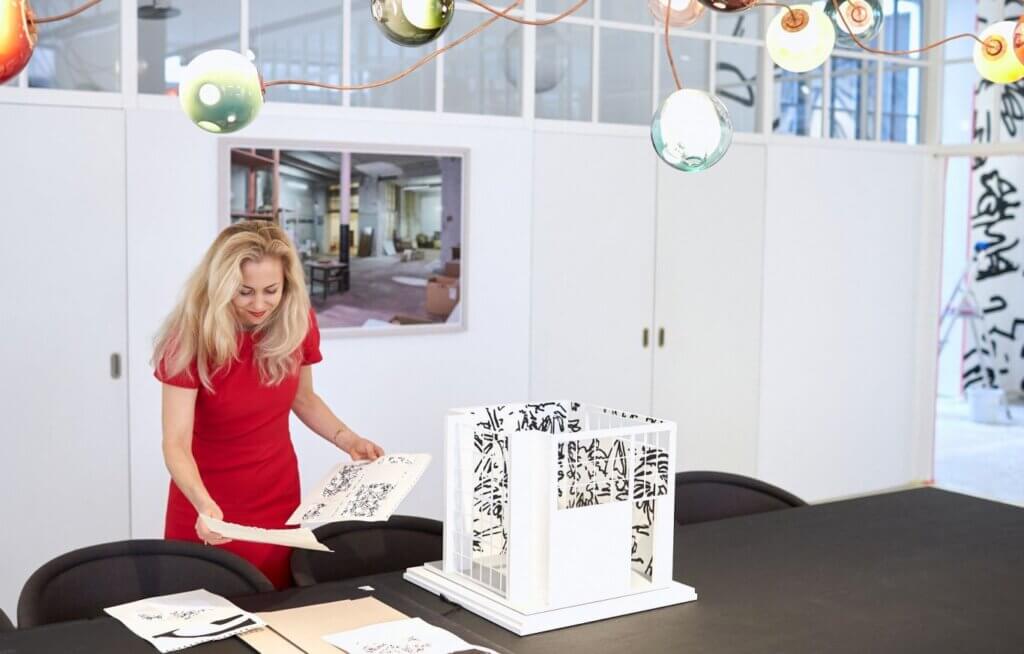
SPARK: I agree. You don’t really own anything in life. You just merely have a certain responsibility for the things you surround yourself with, the things you tame in a way. Do you know The Little Prince, his fox and the rose? Is there an artist who particularly caught your eye? One you fell in love with? A rose or a SPARK?
Kathrin Weber & Axel Anderl: We don’t name favourites among ‘our’ artists. We like them all very much and have agood, very personal relationship with them. That is a central approach to our collection. When I think of SPARK: Nana Mandl made a magnificent appearance at the fair by designing the booth as a total work of art.
Clemens Wolf also had a very nice presentation. But we already had both of them in our collection at the time. This year, Violetta Ehnsperg and Georg Haberler caught our eye. We acquired works by both of them, and Violetta exhibited with us in the autumn. This was very well received by our art friends! Georg will follow in the spring – we are very much looking forward to it. His works simply make us happy.
SPARK: You are SPARK fans and actively support us. What do you like so much about SPARK?
Kathrin Weber & Axel Anderl: The clear concept of one artist per booth. This prevents the arbitrariness of exhibition stands, which otherwise often opt for similar, safe positions. It also allows artists to be presented in depth and not just with one or two works that may not be entirely representative.
SPARK: What is the unique tension in the Viennese art world in international comparison, and what role does your art space play in this structure?
Kathrin Weber & Axel Anderl: Vienna has always been a city of art. Over the years, it has lost importance, then regained it. However, the city often makes itself smaller than it actually is with its history and density of possibilities. At the same time, the Viennese art scene is also a village; people get to know each other quickly. With our concept, we take on a certain special role because we link artists, the art world and the economy in equal measure. And we do so without any immediate financial interests of our own. This allows us to act freely and authentically. With our art evenings, we also reach people who might not otherwise have visited a gallery. And we give young artists visibility in circles that are relevant to them.
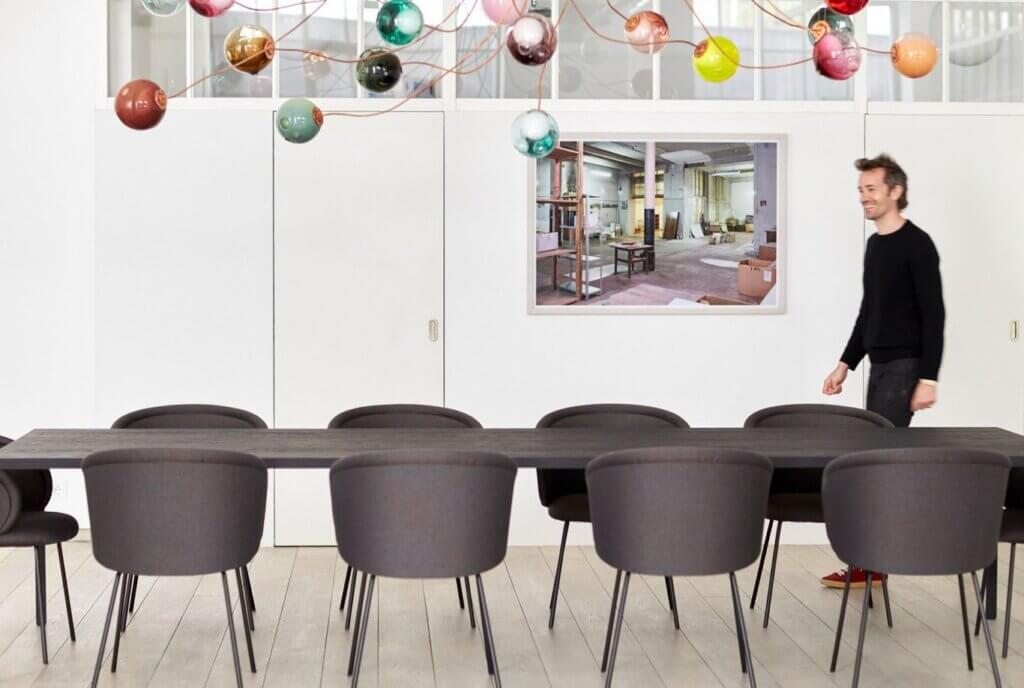
SPARK: You are both successful lawyers. Art law, Mr Anderl, deals with ownership, authenticity and exploitation rights. How does this rational framework influence an emotional, often intuitive purchasing decision?
Kathrin Weber & Axel Anderl: Axel represents many artists and art institutions. Kathrin also has professional connections with succession planning for artists. Unlike in other areas, such as football or sport in general, a look behind the scenes does not spoil the enjoyment. On the contrary, legal representation in the field of art law was actually the starting point for our collecting career. And collecting is always a mixture of emotion and rational decisions. The latter provide a framework within which we can then move freely. And we are also a good corrective for each other. Purchases are only made unanimously.
SPARK: When you acquire a work, what urgency – aesthetic, thematic or biographical – must it convey in order to be included in your collection?
Kathrin Weber & Axel Anderl: It has to appeal to us, it can’t be too well-behaved or interchangeable. We’re always looking for something special, something challenging. Average isn’t our world. Neither professionally nor privately.
SPARK: That reminds me of a conversation I had with Vera Munro recently. She had the windows from the Wittgenstein Villa installed in her house. Herzog & de Meuron said several times: That’s not possible! And then, when it was possible, it was of course very expensive. She did it anyway. The house is a Gesamtkunstwerk, a statement in matters of taste. She said to me over tea: Never settle for mediocrity. I replied that I never do, but that it is quite exhausting at times. ‘Perfection has its price.’ She looked at me and said, ‘And it will pay off in old age. You will look back on a fulfilled life because you always did what you believed in.’ I had to smile and I look forward to that day coming. How do you see the future of collecting in an increasingly digitalised world?
Kathrin Weber & Axel Anderl: Nothing will change for us. Axel is a pioneer in IT law in Austria. Nevertheless, orperhaps because of this, our collection is purely analogue. As a counterbalance to our jobs – whether it’s our IT specialisation or simply the amount of digital work we do – we seek out tactile experiences. Digital art cannot offer us that. Axel also provides legal advice in these areas. However, we do not collect digital art. Digital tools for managing the collection are welcome, though.
SPARK: Can the emotional intensity of an original be replicated or even enhanced by digital forms?
Kathrin Weber & Axel Anderl: Not from our point of view. We spend enough time looking at screens. In our private lives, we want experiences that are as analogue, immediate and tactile as possible.
SPARK: Do you have a favourite place in Vienna?
Kathrin Weber & Axel Anderl: Keep an open mind – otherwise you’ll miss out on (too) much in life.
SPARK: I have the same motto, but sometimes I think of Jenny Holzer and her truisms and the slogan ‘Protect me from what I want’.
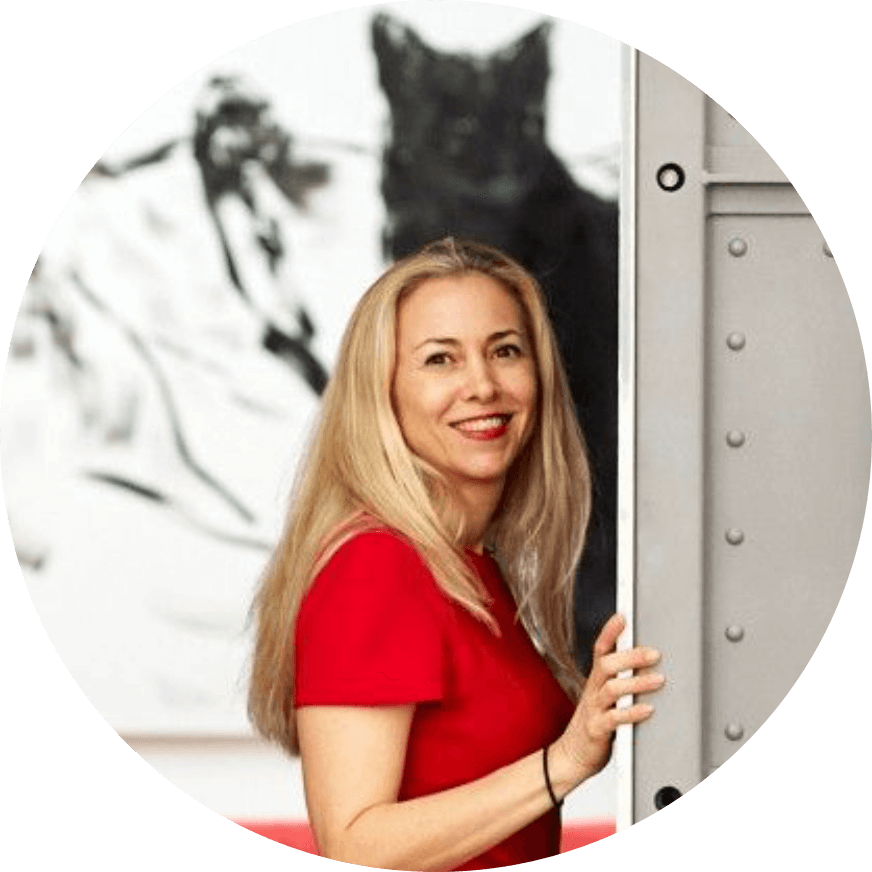
Kathrin Weber
Lawyer, Collector and Owner of Art World Vienna

Axel Anderl
Lawyer, Collector and Owner of Art World Vienna
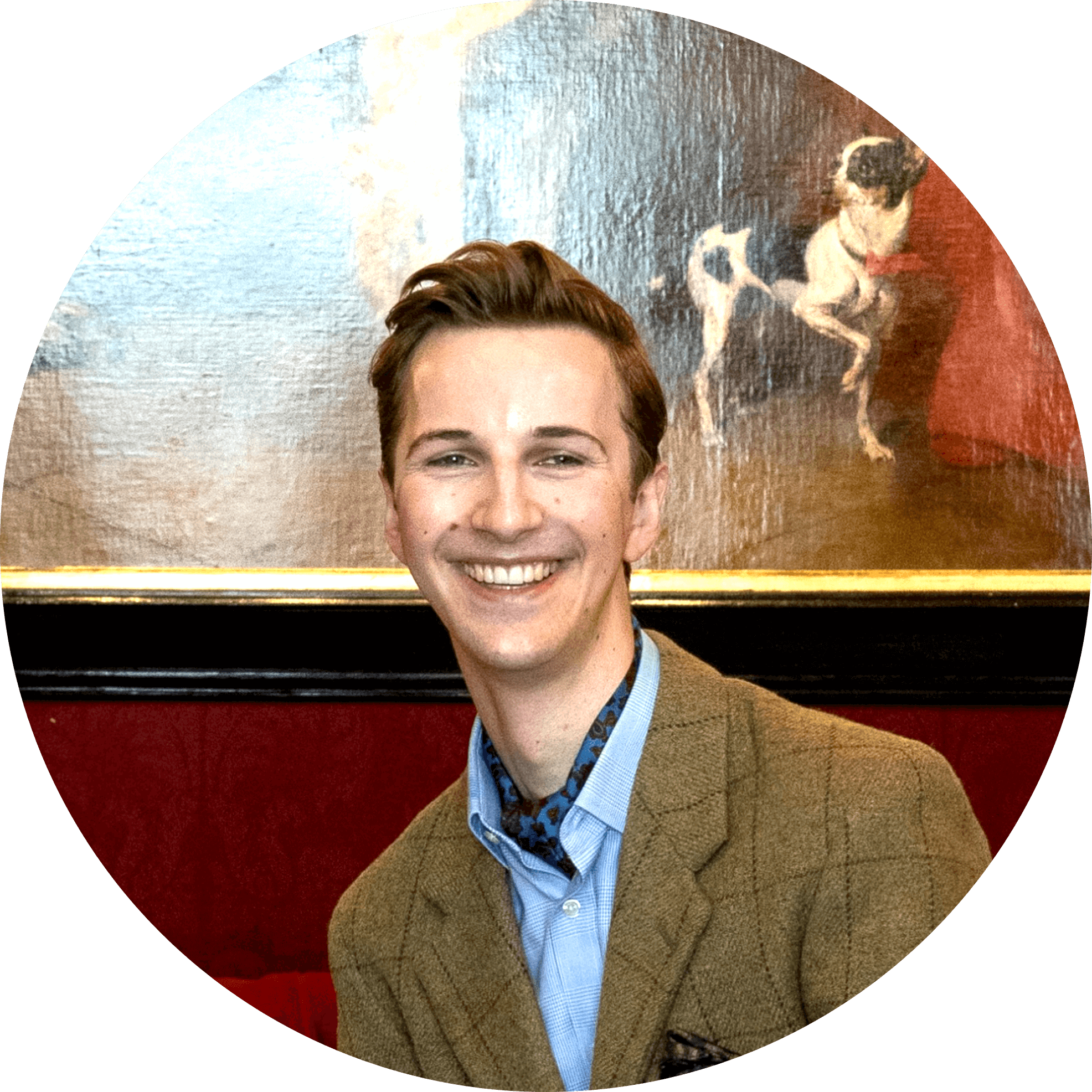
Mark Alexander Grübbeling
Communcation & Social Media SPARK Art Fair Vienna