
SPARK CONVERSATIONS
“Art is meant to be seen” – A conversation with Sebastian Haselsteiner about STRABAG ART, art in the workplace, and his personal approach to the collection
May 19, 2026
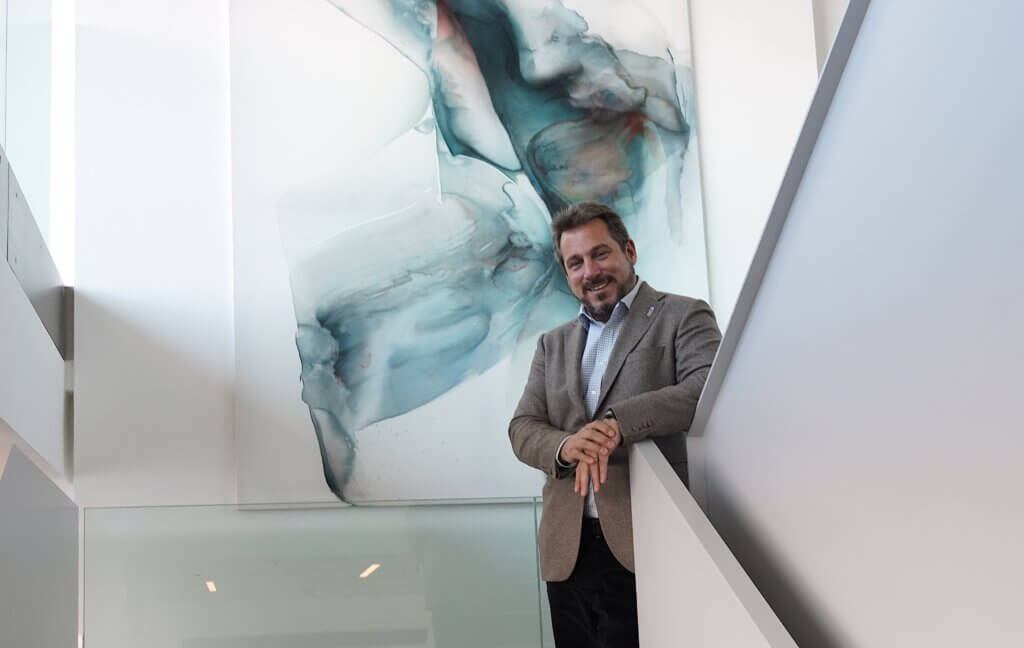
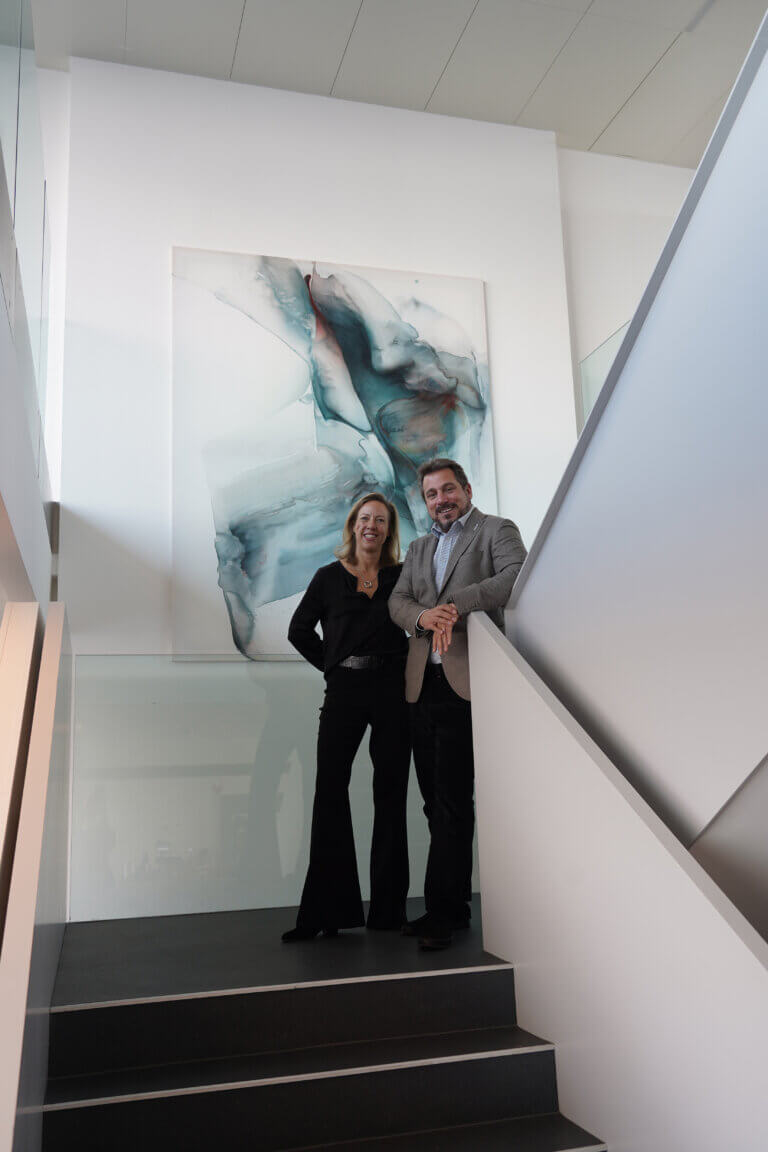
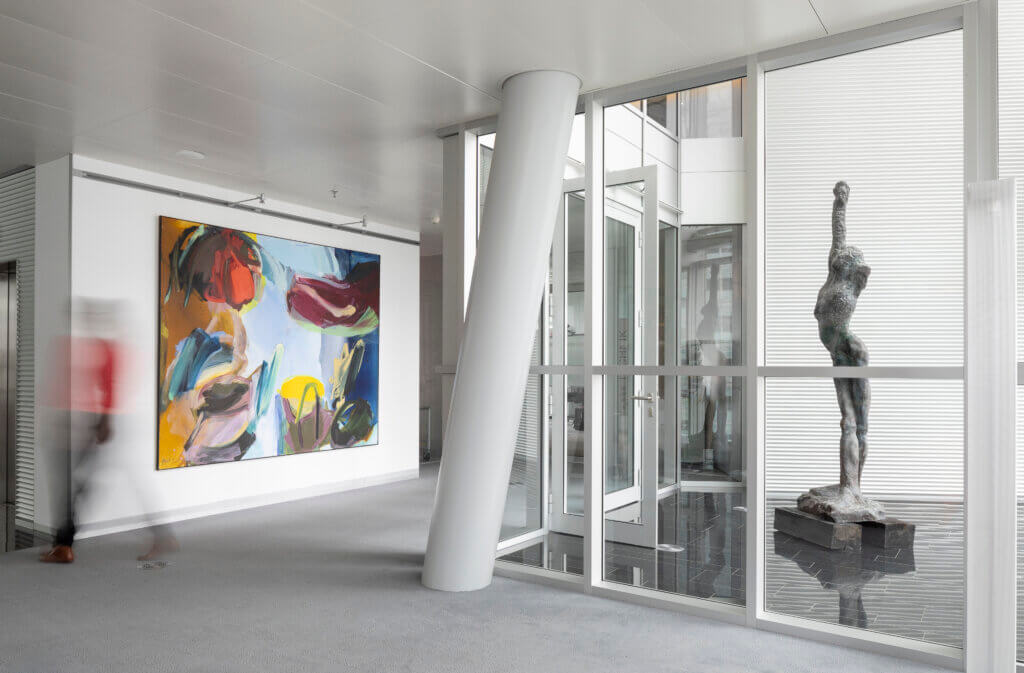
Sebastian Haselsteiner has been leading STRABAG ART since 2022. STRABAG SE, an international construction group with Austrian roots and headquarters in Vienna, has been significantly shaped by the Haselsteiner family over the decades and guided on its path to success. In addition to its commitment to numerous cultural institutions, the company has built up a remarkable collection of contemporary art, which today comprises about 8,500 works. STRABAG ART operates according to a clear philosophy: art is not viewed as a decorative accessory, but as an integral part of work and living spaces.
In this conversation, Sebastian Haselsteiner offers insights into the origins and evolution of STRABAG ART, reflects on the significance of art and culture in everyday life, and discusses the current role of art fairs.
SPARK: Mr. Haselsteiner, there is art hanging all over the house. Your collection now comprises around 8,500 works. How did this passion first begin?
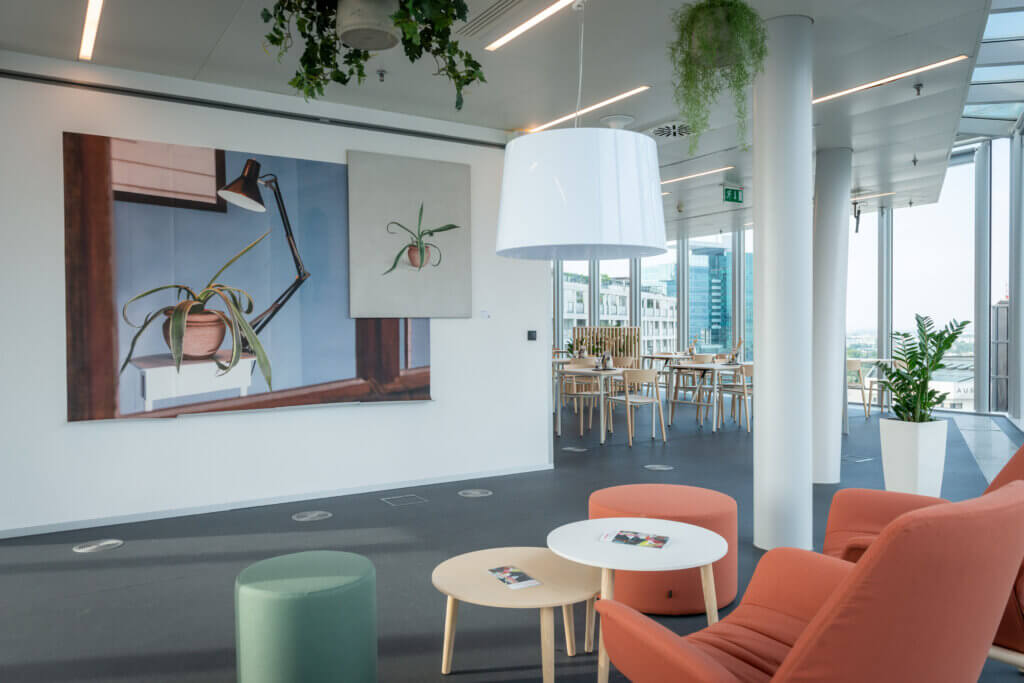
Sebastian Haselsteiner: In fact, it’s slightly fewer than 8,500 works. The original purpose of STRABAG ART was to integrate contemporary art into the company’s office buildings. Back in 1989/90, my father and one of his colleagues agreed that they no longer wanted to see only construction-site photos and blueprints on their office walls. At the suggestion of Willi Weiss, the idea emerged to begin acquiring contemporary art in a focused and deliberate way.
SPARK: What do you hope to achieve through the presence of art in everyday working life? Do you believe art in the workplace can influence—or even enhance—creativity and productivity?
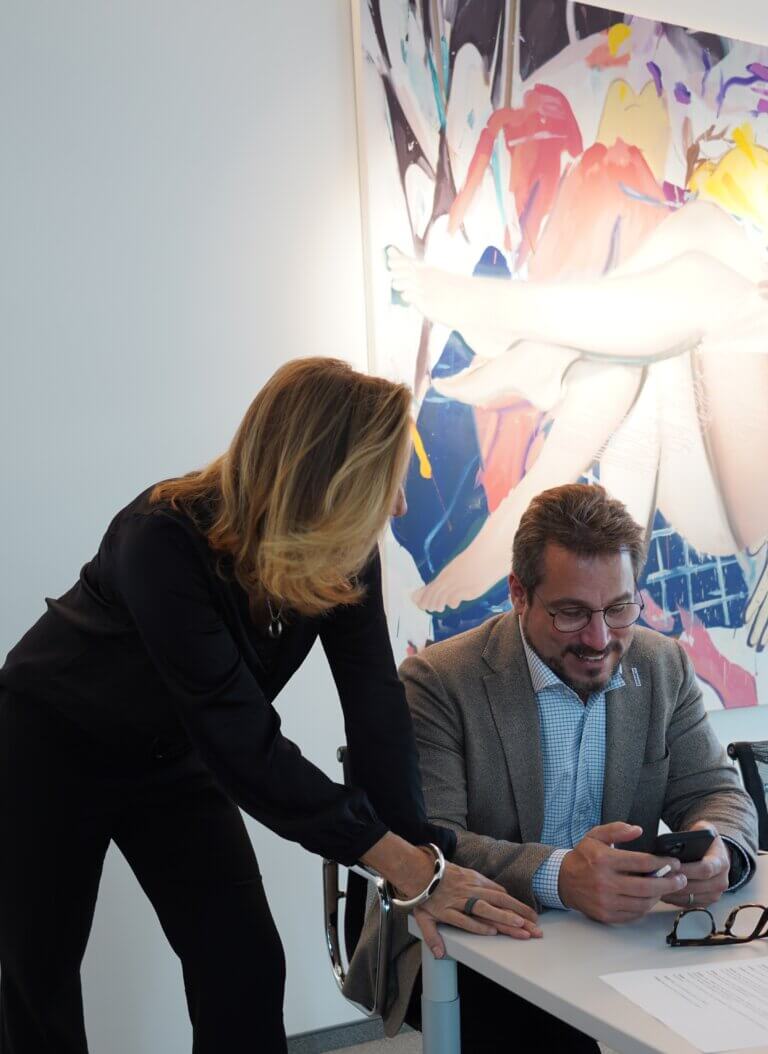
Sebastian Haselsteiner: An increase in productivity would of course be desirable, if it could be measured. The criticism we often hear is that STRABAG ART does not make a direct contribution to the company’s financial results. My response is always the same: our added value cannot be expressed in numbers, but it creates an incomparable atmosphere in everyday working life. Beyond its aesthetic dimension, art fosters openness and communication in the workplace. It enhances well-being and significantly improves the quality of time spent in the office.
Our goal is to ignite a spark among our colleagues—the SPARK, a passion for art. Even if that spark doesn’t always catch, a tangible atmosphere still emerges. I like to compare it to the architecture of a city, or Vienna’s historic center: you don’t need to examine every detail closely to feel its impact. It’s like walking through a Gesamtkunstwerk, an atmosphere that everyone can sense.
SPARK: You are also introducing new concepts, such as the STRABAG ART Container. This project leaves the safe terrain of the corporate headquarters and enters the public space. Why this impulse to take art out onto the street?
Sebastian Haselsteiner: It’s not about going out onto the street, it’s about going onto construction sites. Construction sites are the true centers of this company. We manage around 8,500 works of art, with approximately 7,300 installed across 75 corporate locations. But even if we were to equip 100 percent of our locations with art, we would still reach only about 35 percent of our workforce. The remaining 65 percent simply don’t work in offices, they work on construction sites. That’s precisely why it’s important to us to do something there, to grow there, and to have a positive impact on our teams.
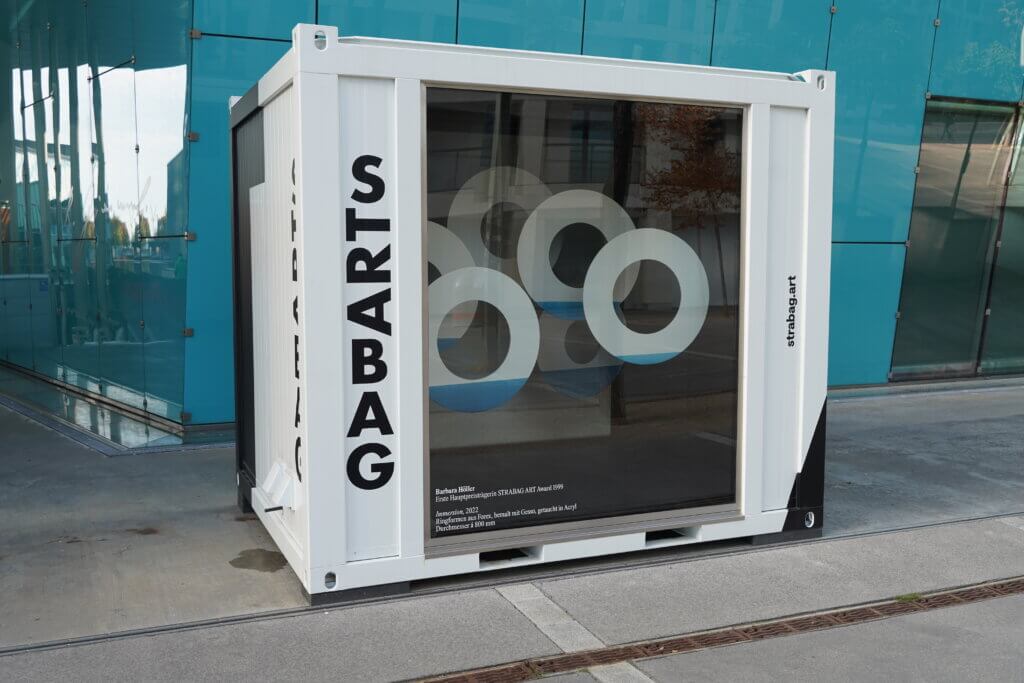
When I saw the Artbox in front of the Leopold Museum, I thought to myself: what is this, if not an oversized, fully glazed construction container? That was the moment the idea for the STRABAG ART Container was born. Of course, bringing art onto a construction site is significantly more challenging. The ART Container is our answer. It allows us to reach employees working on construction sites and to democratize access to art within the company.
The Art Containers are art in public space. My very first wish for a location was the construction site of NEST at Karlsplatz. In the competition for the best talent, we believe art is an essential piece of the puzzle—both for attracting people and for retaining them over the long term.
SPARK: The STRABAG Kunstforum was recently renamed STRABAG ART. That sounds like more than just a change of name. What exactly does this step represent? What’s new?
Sebastian Haselsteiner: It truly was a comprehensive transformation, a true metamorphosis. Over the 35 years of its existence, from 1990 to the 30th STRABAG ART Award in June of this year, the STRABAG Kunstforum evolved into a complex and mature structure. It began as a small private collection in southern Austria, in Carinthia.
The first focus of our collecting strategy was contemporary art from Austria after 1945, a foundation we maintain to this day. The second focus emerged shortly there after: in 1994, the construction group launched its first art prize for painting and drawing, which later developed into the STRABAG ART Award. These two focuses remain central to our collecting strategy. In 2009, the Art Award was internationalized.
The branding also evolved organically. In 1998, it was still called the STRABAG Kunstforum. In 2003 and 2004, STRABAG relocated from Carinthia to Vienna, and the Kunstforum followed in 2005. From that point on, all art-related activities within the group were branded as “STRABAG ART …”.
As the Kunstforum became increasingly international, we were working more and more with countries whose official language was not German, but English. I therefore concluded that it was necessary to harmonize all areas, internationalize them, and make them fit for the future. What mattered most to me was building on the existing foundation and continuing the story that began 35 years ago.
SPARK: Do you also collect art privately?
Sebastian Haselsteiner: Yes. Once you get a taste for it, there’s no turning back. I have a strong interest in Japanese artists, as well as Austrian artists who have lived in Japan for long periods. My wife is Japanese, and my children grew up bilingual. I love the country deeply. The time we lived in Japan from 2017 to 2019 was a wonderful period in my life.
When we later furnished our home in Vienna, it was important to me to create a blend of Austrian-European and Japanese influences in both art and furniture.
Art becomes valuable to me when I develop a personal story around it. The first work I ever bought was in Venice. It was by a Swedish artist and dealt with Nordic mythology. I knew immediately: I must have this. At the time, it was an expensive painting for me; today it’s priceless, and I would never part with it. The story is part of it—that’s what gives it value for me.
SPARK: What role do you believe art fairs play in making art accessible to a broader audience?
Sebastian Haselsteiner I consider art fairs to be a very important factor in making art accessible to a wider public. A fair offers a broad overview of what’s happening in the scene. Of course, it’s only a snapshot, but for people who don’t engage with art intensively in their daily lives, a fair provides a low-threshold entry point. In my opinion, the significance of art fairs can hardly be overstated.
SPARK: Are you friends with artists? Which artists do you particularly admire?
Sebastian Haselsteiner: I have friendly relationships with artists, especially those with whom I’ve had the privilege of sharing personal experiences. I greatly admired Franz Grabmayr. My father had purchased three large works by him, and Franz presented them to us once more in his studio. Afterwards, we went to the Marxerhof and then into an adjacent building, where we entered a cellar. Franz had prepared some wine and bacon for us. Hundreds of his dance paintings were lying around. He said, “As a thank-you, each of you may choose one work.”
My parents immediately decided to put together a three-part series for me. These works hung in my student apartment in Vienna for over 20 years. When I later transferred them to our archive, I noted in our system: should anything ever need to be sold, never these three. They may not have great monetary value, but the story and the memory of Franz are priceless.
I don’t collect for storage. Of course, we must preserve our artworks, and we can’t display the entire collection at once. But art is meant to be seen. On average, a work spends less than a year in storage before being installed again at one of our locations and presented to our employees.
SPARK: What is your favorite museum in Vienna?
Sebastian Haselsteiner: I wouldn’t limit myself to a single museum. I have a close connection to the Albertina Modern, as I accompanied the renovation of the Künstlerhaus at the time with my architecture office. In general, my enthusiasm always depends on the exhibition itself. For example, I was particularly excited about the Amoako Boafo exhibition at the Lower Belvedere, as he is one of our main prize winners. While STRABAG does not operate its own museums, I like to say: we have 75 small museums at our locations—and I enjoy being there as well.
SPARK: How can people interested in art engage with you?
Sebastian Haselsteiner: Our exhibition openings are open to the public. Looking ahead, I would like to open the ART Lounge more strongly to the outside. For a long time, getting people to cross the Danube has been a challenge. I used to think we should stay here and develop a concentrated nucleus—so strong and magnetic that people would come to us on their own. In reality, however, I met people on the other side of the Danube who said how great it was that the STRABAG Kunstforum was finally making the leap across the river. I stood there thinking: it’s a twelve-minute ride on the U1 from Stephansplatz, and that’s when I realized we need to move STRABAG ART more toward the city center and meet people where they are. At the same time, we are the only cultural institution in this immediate area.

Sebastian Haselsteiner
Head of STRABAG ART
Dania Kwizda-Dejanoff
International Relations SPARK Art Fair Vienna