
SPARK CONVERSATIONS
Between tradition and timeless elegance:
The artisanry and legacy of J. & L. Lobmeyr with Johannes Rath
June 16, 2026
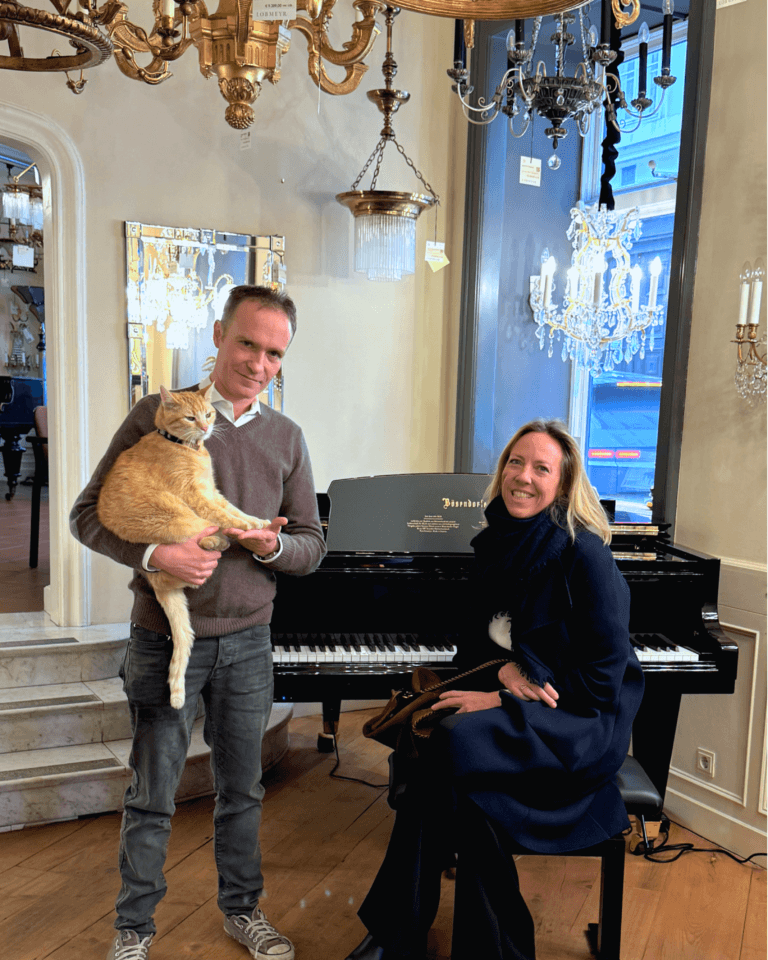
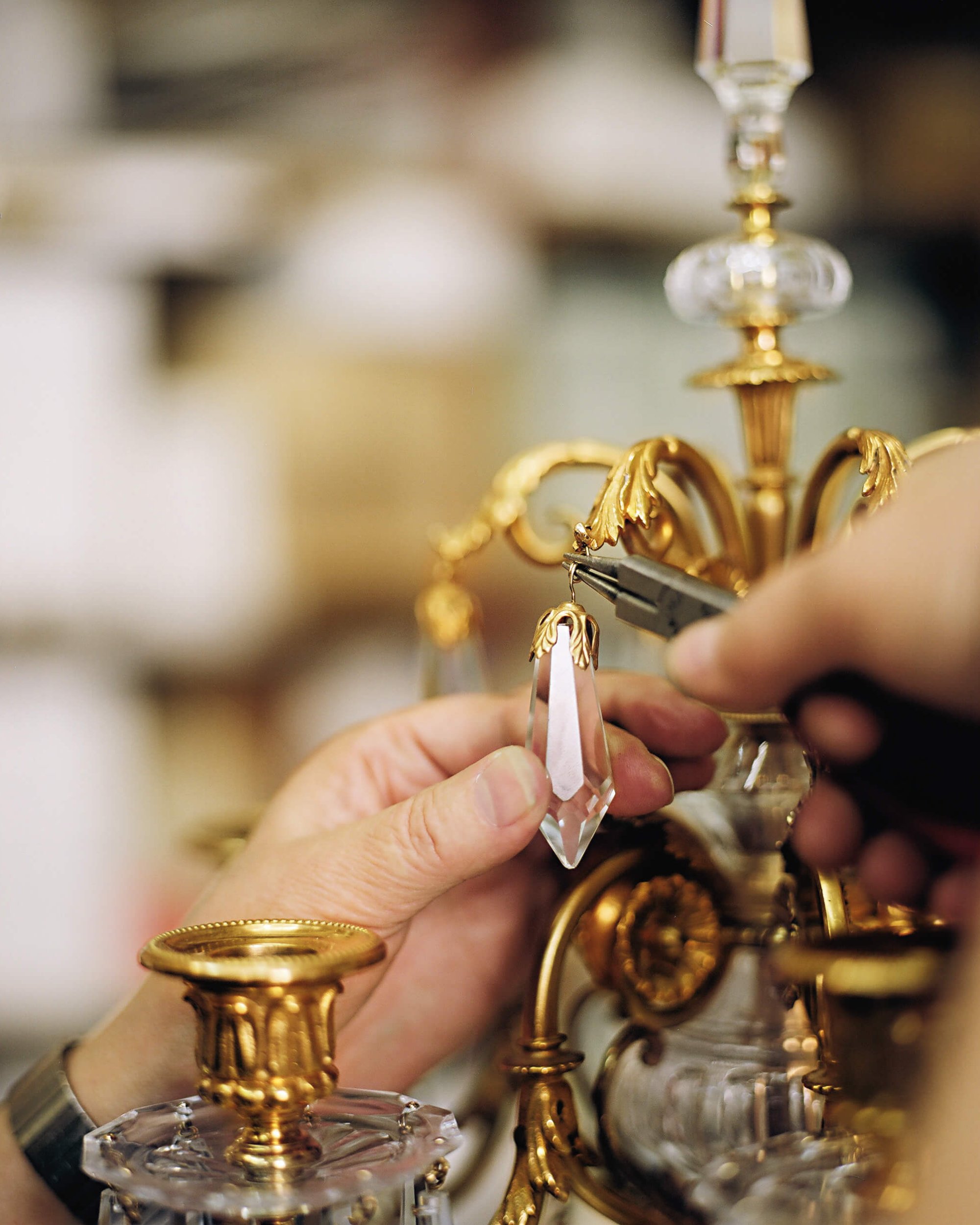
Few names are as closely associated with Viennese glass art as J. & L. Lobmeyr. For generations, this long-established company has stood for the highest level of artisanry, timeless elegance, and a keen sense of aesthetics. In conversation with Johannes Rath, a representative of the sixth generation and managing director of J. & L. Lobmeyr, we discuss his personal approach to the glass manufactory’s artisanry, the balance between tradition and innovation—and what it means to share a piece of Viennese culture with the world.
SPARK: Together with your two cousins, you represent the sixth generation of the Lobmeyr chandelier dynasty in Vienna, and you have been jointly managing the company since 2000. What are your earliest memories of Lobmeyr or the atelier?
Johannes Rath: My first memory—that’s easy; it’s still very fresh! I called it treasure hunting. Since old chandeliers were always being carried across the courtyard from the sales area to the atelier for restoration, things would often fall off. Boxes had holes in them, or other items would just be left lying around. As a kindergartener, I spent entire afternoons on all fours in the courtyard with scraped knees and dirty hands, searching for and often finding the most beautiful treasures on the ground. Colorful beads, scraps of wire, fragments of rosettes or pendants. Little adventures at home.
SPARK: Lobmeyr, a glass manufacturer with a long tradition, has enjoyed worldwide recognition for generations for its exceptional artisanry and keen sense of design. With that in mind, the question arises: What has been the most elaborate and challenging piece you have worked on to date?
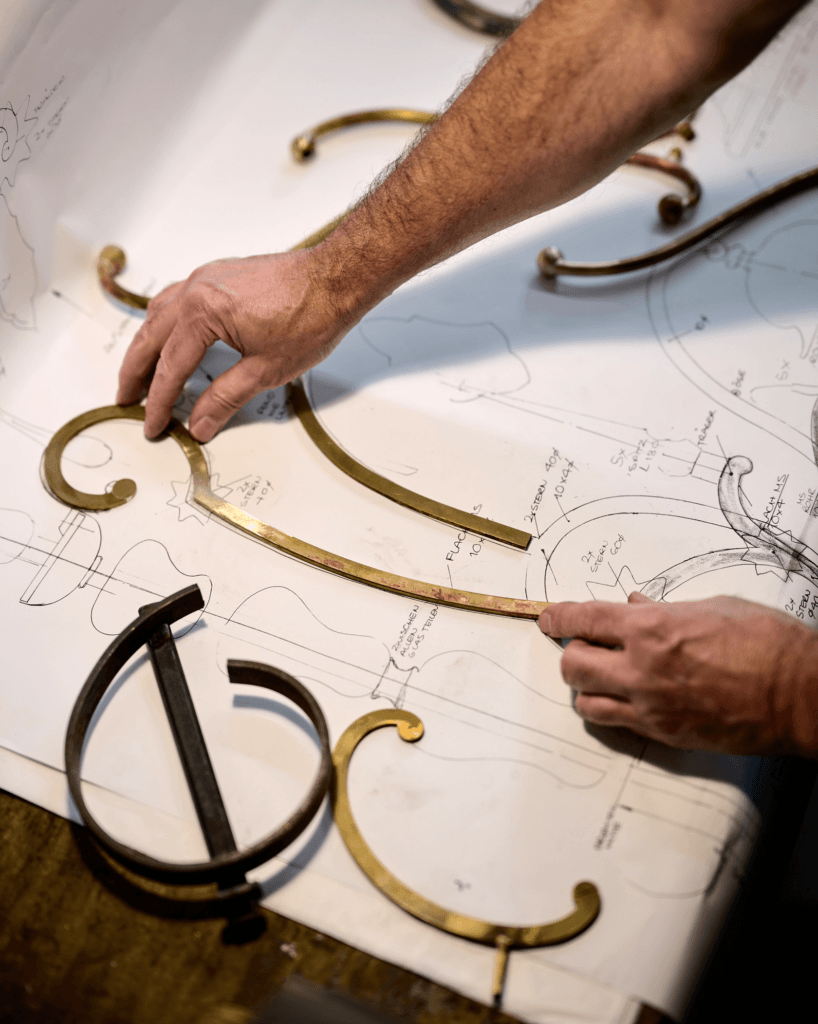
Johannes Rath: The most challenging project? That was probably an installation for the stairwell of a multi-story penthouse in New York. It spanned three or four floors. The space between the staircases was just under 40 cm, and the architects were concerned that a suspended sculpture might start to sway in strong winds, which could cause damage. So we suggested not installing a suspended structure, but rather mounting a series of “wall arms” directly onto the staircase structure. Since we had to manufacture the structure virtually in parallel with construction progress in order to meet the delivery deadline, our technician flew to New York three times to continuously remeasure the mounting points and make adjustments to the structure in Vienna.
The result is an almost otherworldly tangle of thin square profiles that rises up through the floors and unfolds into a large chandelier in the open space of the top floor. The tubular structure supports approximately 140 small lanterns with convex mirrors, which bathe the stairwell in a bright yet subtle light.
SPARK: Every piece from Lobmeyr is a work of art in its own right. The production of their glassware and chandeliers is rooted in a tradition that has evolved over centuries, with each piece being handcrafted with the utmost care. What do you see as the difference between artisanry and arts?
Johannes Rath: Artisanry and arts—that’s a good question! “Artisanry” is a bit of a contrived term, but it best expresses what we stand for. Elevating artisanry to a level where it becomes art. Or selling art—something crafted with such skill that it seems almost priceless. When it comes to arts, on the other hand, I often think of hobby projects. When artists dabble in artisanry without having truly mastered it. What really constitutes art probably comes down to the eye of the beholder.
SPARK: Is there a piece of wisdom or insight that has been particularly helpful to you in life?
Johannes Rath: Of course, these words of wisdom are the secrets of the company. But I did come up with one thing that has often helped me: When you have to choose between two things that are so similar that the decision seems impossibly difficult, it often doesn’t matter which one you choose, because they’re both so alike.
SPARK: Your company has always been synonymous with timeless elegance, the highest quality, and a keen sense of aesthetics. Would you describe yourself as more of a maximalist or a minimalist?
Johannes Rath: You have to know when you can or should go overboard. But generally speaking, I think I’m more of a minimalist. It sounds strange in this context, but even the minimalist can be beautiful and artistic.
SPARK: Is there an anecdote from your professional life that has particularly stuck with you?
Johannes Rath: Hanging rods are always custom-made and cannot be shortened to a different length. Not because it’s impossible, but because doing so would almost certainly damage the rod’s delicate surface. That’s why we advise against it. However, one customer wouldn’t listen to us and told us she was going to try it anyway. A few days later, she sent us word that she’d succeeded. We were completely baffled as to how she had managed it. Her answer: “The guys at the Lab can do anything!” Of course, we asked which “Lab” she had our pole shortened at.
The reply: “At the NASA Lab at Green Bank Observatory.” And that was a good thing. It’s perfectly normal for NASA to be able to do something that Lobmeyr advises against. Don’t try this at home. Unless you’re NASA.
SPARK: Your work regularly takes you to important places around the world, making you an ambassador for Vienna’s traditional artisanry. Lobmeyr chandeliers themselves enjoy international fame and can be found in some of the world’s most prestigious homes. In this unique setting, the question arises: Do you ever feel a little like a celebrity yourself?
Johannes Rath: I was in New York (again!) to take down the chandeliers at the Met for restoration. It caused quite a stir—the opera house without its chandeliers. On my way to an appointment, I got a call from an unknown number. It was a rather elderly lady, a distant relative through many degrees of separation, who had been living in the city for a long time. Since she spoke very softly and it was quite loud on the street, I didn’t understand her very clearly when she asked me something. On a hunch, I replied that I was 31 years old. She then said she already knew that—she’d read it in the newspaper. That day, I really felt like a celebrity!
SPARK: Do you collect art yourself?
Johannes Rath: Collecting art in the strictest sense? No, not really. But I do incorporate art—in a broader sense—into my interior design style. My partner, Sheila, has a real knack for this and is always finding unique pieces from different eras, which she then skillfully combines. But at Parallel 2020, she fell in love with an artist’s work—though unfortunately, she forgot who it was. A few years later, we met an artist at a pop-up gallery opening who my girlfriend also really liked. As luck would have it, it was, of course, the same artist, though with different works, so it wasn’t immediately clear: Michaela Schwarz-Weismann. So, just to be safe, we bought a painting a few days later.
SPARK: What styles or themes in art particularly appeal to you?
Johannes Rath: Themes in art? I’m pretty much a visual person. It’s primarily the colors that appeal to me. Not necessarily bright or garish, but I’m often drawn to combinations that I find beautiful. An explosion of rainbow colors, or even just the combination of two colors—preferably complementary ones.
SPARK: What do you think truly stands the test of time—in design, in life, or in art?
Johannes Rath: Someone once said that the only constant is change. I couldn’t agree more. But I often perceive things as permanent—as something that’s mine, that I’m living with right now. I buy something or start something, and then it becomes mine. It becomes a part of my life and stays that way. Until there’s a reason to change something, I don’t necessarily hold on to it. But generally speaking, based on my professional experience, the things that stand the test of time are usually those that don’t stand out too much. In design, for example, something that fits a particular style or trend tends to fade quickly. The best designs were usually not exactly on-trend at the time, but they had something that set them apart—something special, a little twist, or something like that. In any case, what endures, of course, is consistency. In my field, that translates to quality, of course. Primarily in terms of materials, but also aesthetically—a certain timelessness, never quite fitting in but always remaining interesting.
SPARK: What hobbies or passions do you have outside of work?
Johannes Rath: Hobbies and passions? Well, I’m a nerd. I’m interested in science—especially physics and astronomy. I often say that if I’d been better at math, I would have become a quantum physicist. “But in business…” is a common response. Then I say that I have great accountants who handle that for me. I’ve also been practicing Brazilian martial arts for almost 25 years and started archery about 10 years ago. It’s kind of like golf, only with more trees.
SPARK: What is your personal dream or vision for the future?

Johanens Rath
Managing Partner J. & L. Lobmeyr

Dania Kwizda-Dejanoff
International Relations SPARK Art Fair Vienna