SPARK CONVERSATIONS

About the Luxury of Living with Art and the Wish to Build a Museum One Day - a conversation with Viennese architect Maria Planegger

By Dania Kwizda-Dejanoff

Many thanks to artist Sabine Hauswirth for the photographs.

September 17, 2026

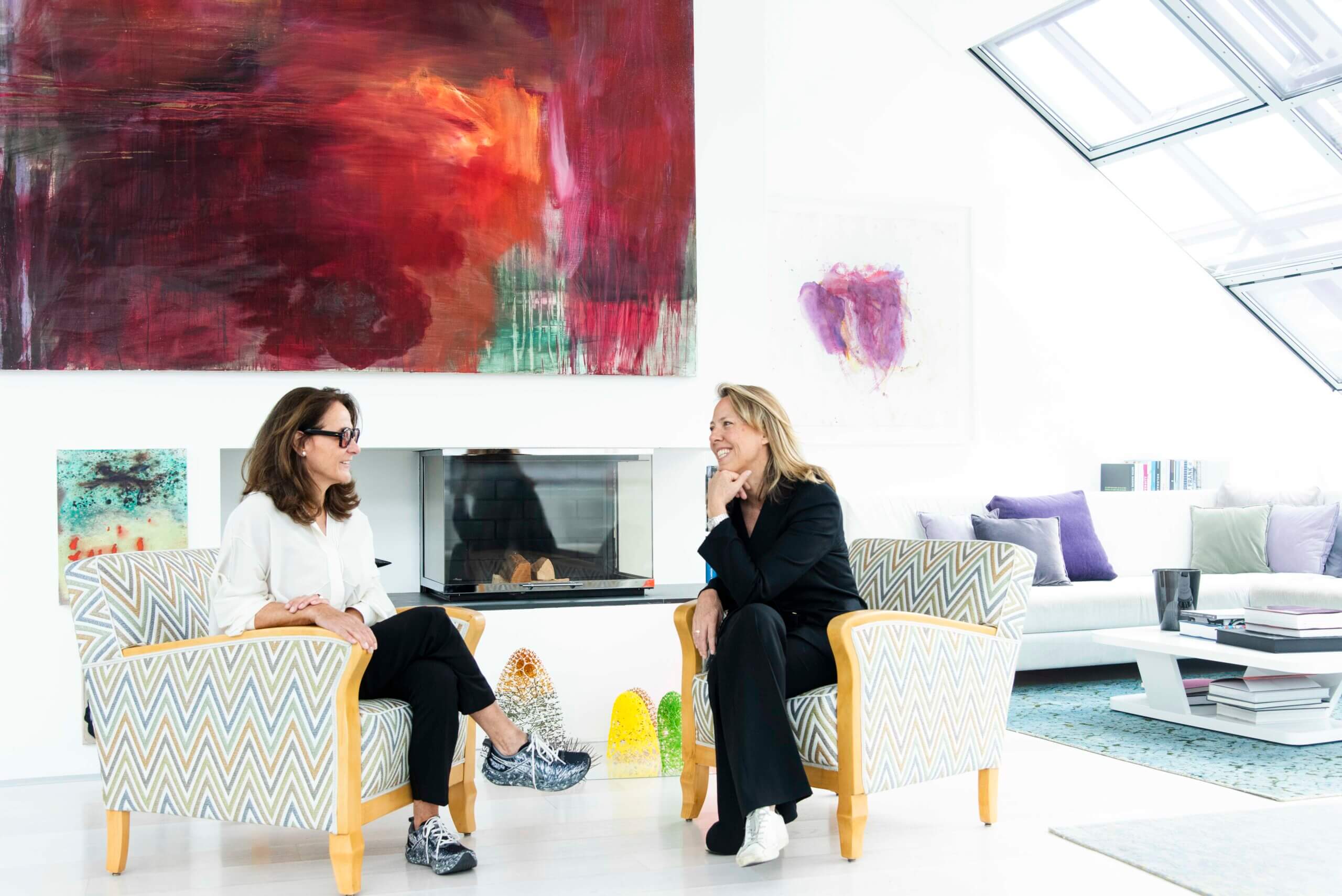
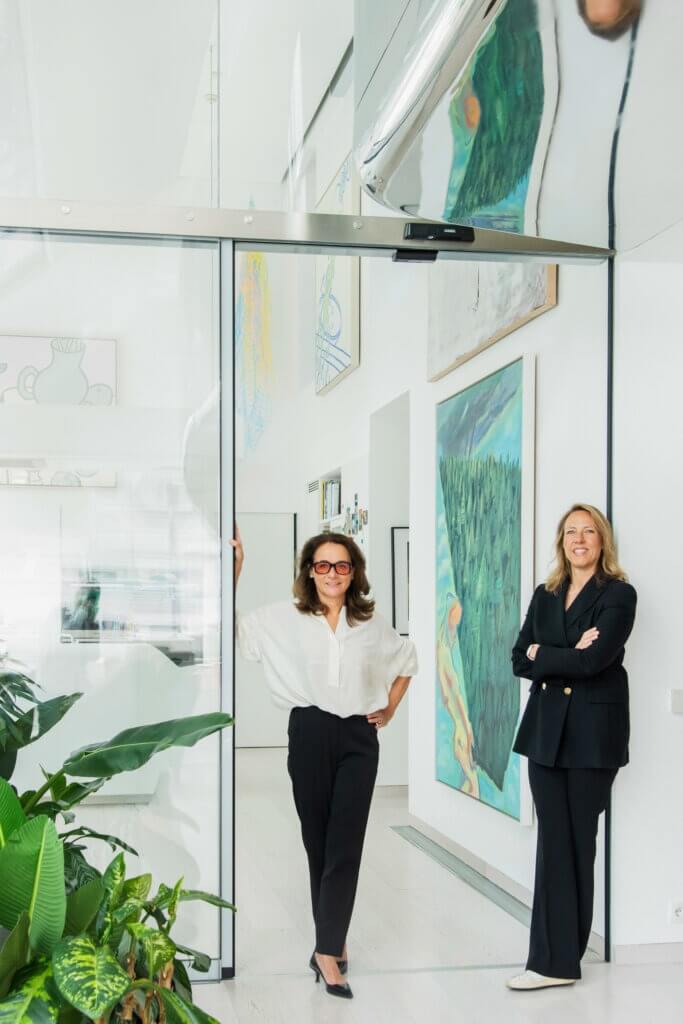
Maria Planegger and Dania Kwizda-Dejanoff, Works: Herbert Brandl 1996, Magtha Jungwirth 2009 © Sabine Hauswirth, 2026

Maria Planegger is one of Austria’s most renowned architects. Her architecture is characterised by a particular sensitivity to space, materiality and atmosphere. As a partner at A01 architects, she has been realising sophisticated residential, hotel and commercial projects for more than 25 years, distinguished by their clear formal language and high level of design quality. For her, architecture is not merely a functional discipline, but a cultural contribution that shapes people, spaces and perceptions.

Alongside her architectural work, she has a great passion for contemporary art and has built a collection over almost two decades that reflects her personal interest in contemporary art and her perspective on space. For Maria Planegger, architecture and art are inseparably connected and shape her approach to space and design both professionally and personally.

SPARK: How long have you been collecting art, and what was the first work you acquired?

Maria Planegger: I have been collecting art for around 20 years. As my children grew older, I gradually had more time to devote to art again alongside my career and family life. That means not only visiting more exhibitions, galleries and art fairs, but also finding renewed inspiration to acquire works.

My first acquisition marked the beginning of a passion that has, over the years, developed into a collection that reflects my personality and interests. Of course, those interests can evolve over time. I believe that buying a work of art should always hurt a little. It should be a conscious decision and reflect a certain respect for the value of the work. Some people treat themselves to a new car or a watch; I treat myself to a work of art.

SPARK: What artistic or intellectual criteria do you consider when acquiring a work?

Maria Planegger: I am an emotional buyer. A work has to move me and, quite simply, I have to like it. I often discover an artist first, then immerse myself deeply in their oeuvre, and only afterwards decide which particular work is right for me.

The process itself is a great pleasure — learning about the works, how they came into being, the stories behind them, and visiting the artists in their studios.

Naturally, a work also has to fit into my collection. But somehow that happens quite naturally. Sometimes I even know exactly where a painting will hang or where a sculpture will stand before I acquire it. For more significant purchases, I also seek professional advice.

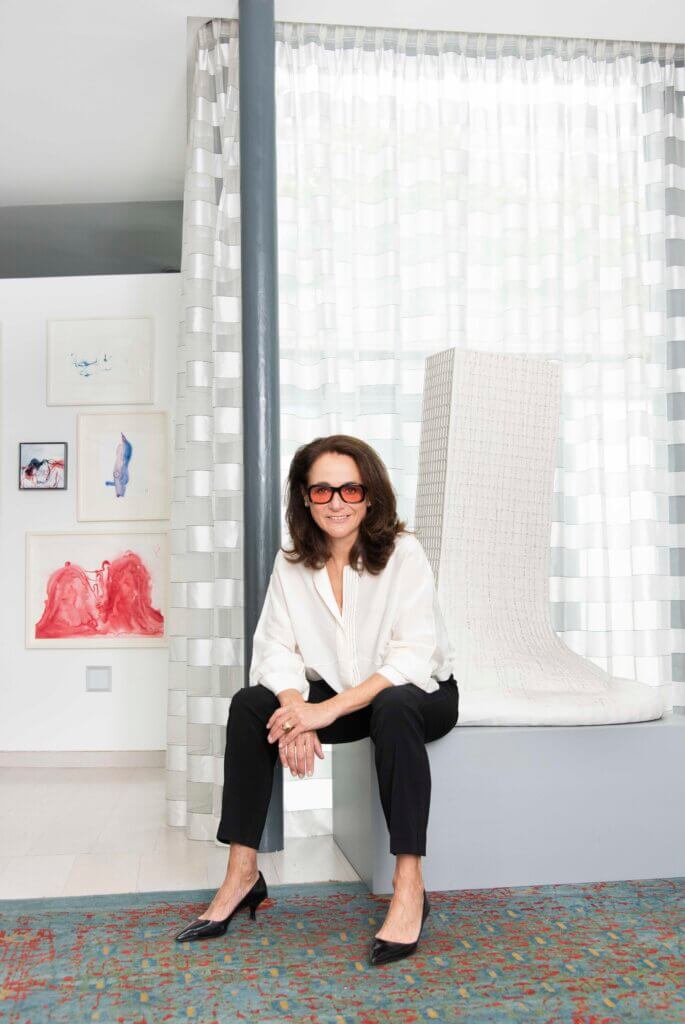
Maria Planegger, Works: Erwin Wurm 2005, Louise Bourgeoise 2009, Tracy Emin 2007 & 2023, © Sabine Hauswirth, 2026

SPARK: Do you remember the first work in your collection? What fascinated you about it at the time?


Maria Planegger: My first works were by Maria Lassnig and Kiki Kogelnik, both Austrian artists. At my first auction, I acquired a work by Erwin Wurm, Mies van der Rohe Melting from 2006. The “melting skyscraper” ironically — and with a good deal of humour — questioned the construction boom and the desire to build ever higher.


SPARK: Is there an artist you particularly admire?


Maria Planegger: Yes, I am a great admirer of the British artist Tracey Emin.

In general, I primarily collect works by women artists. Perhaps that also has something to do with my own life: I am a working woman and the mother of three daughters. For that reason alone, my perspective is naturally more attuned to female perspectives and lived experiences.

I am drawn to many women artists whose lives have often been shaped by particular challenges. Their themes and questions frequently resonate with me on a very personal level. Many of them have had to overcome obstacles and fight for their place in the art world. As a result, their biographies often appear more complex and compelling, and their artistic development particularly tangible. The connection between life experience and artistic practice is often especially evident.

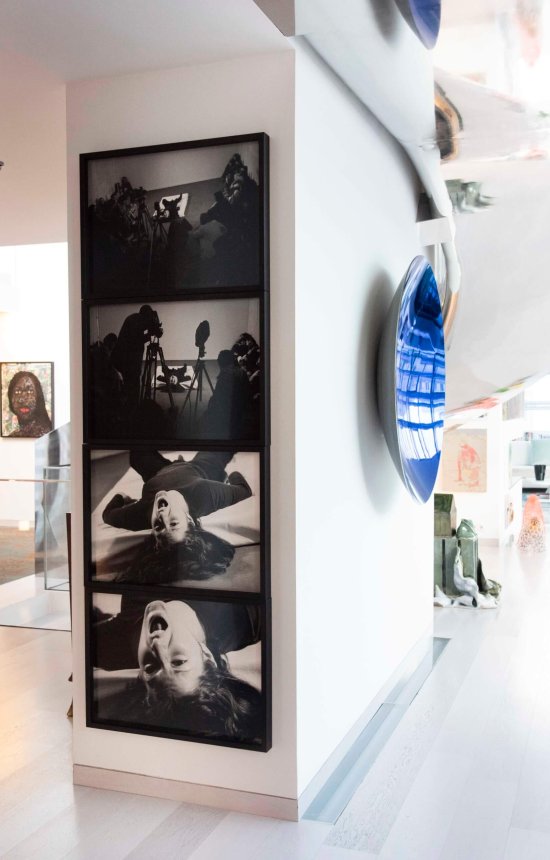
Marina Abramović is one of the best examples. Her work can hardly be understood without knowing something about her biography. Her performances are deeply connected to her life experiences and personal history.

_DSC0183_planegger_fin_low
Marina Abramović 1975, Amoako Boafo 2023, Anish Kappor 2001 © Sabine Hauswirth, 2026
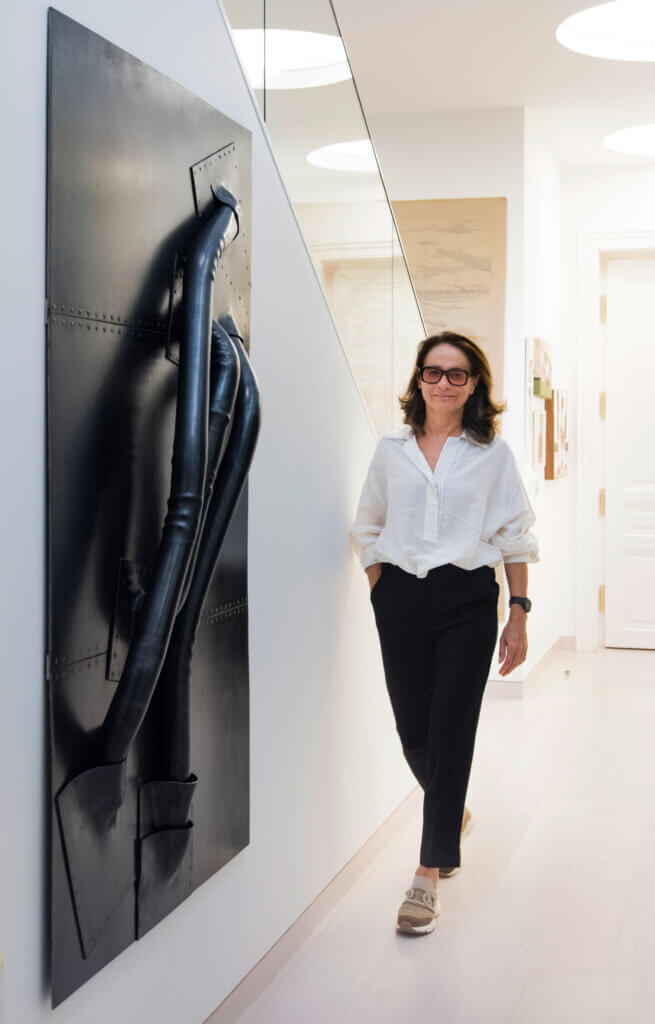
Maria Planegger, Work: Toni Schmale 2025 © Sabine Hauswirth, 2026

SPARK: Is there a recent discovery in the art world that particularly fascinates you?

Maria Planegger: The German artist Toni Schmale and the Austrian painter Maria Legat — two very different contemporary positions that I find fascinating.

SPARK: Which architects do you admire?

Maria Planegger: I admire many architects. I am particularly fascinated by those who have made architectural history through their houses and villas. These projects are often discussed less because they are private, yet they have had a lasting influence on architecture and have set new standards. And, of course, visionary clients have always been essential to making such projects possible.

John Lautner, Mies van der Rohe and Frank Lloyd Wright are among them for me. And, of course, Zaha Hadid is a major architectural role model as well. There are also, naturally, a number of remarkable examples in Europe.

Maria Planegger and Dania Kwizda-Dejanoff, Work: Maria Lassnig 1985 © Sabine Hauswirth, 2026

SPARK: Which buildings should one see in Vienna — and which ones around the world?


Maria Planegger: Housing is one of the areas I am particularly passionate about. To truly experience Vienna as a city, I believe you should take a ride around the Ringstrasse or hop on the U6 to appreciate the city’s remarkable architectural diversity.

And, of course, there are the Danube Flats on the New Danube, which have become a new landmark on Vienna’s skyline.


SPARK: Do you see a shift in the way society perceives space and materiality today, particularly in light of the increasing digitalisation and virtualisation of our lives?
 
 
Maria Planegger: The more virtual our world becomes, the more important the physical experience of space will be. A museum is still a place that we experience in real life. The Pinault Collection, with Palazzo Grassi and Punta della Dogana, demonstrates this particularly well. The MAK is another good example.

Much of what happens in the digital world will remain there and will not require physical space. But people will always need places that offer a sense of quality and comfort, enable encounters, and create sensory experiences. Or, alternatively, one can go for a walk in the woods.

I have the impression that materiality, craftsmanship and quality in architecture are once again being valued more highly today.

SPARK: When does a home become a museum? And should a home be a museum?

Maria Planegger: No, I don’t want to live in a museum.

In a museum, paintings and works of art are alive, but people don’t live there. As a collector, I try instead to integrate art into my life and my everyday surroundings.

Not with the distance of a museum, but as part of everyday life. Living with these works and being able to enjoy them every day is, for me, a great luxury.

But as an architect, I would very much like to build a museum one day. That would be a wonderful task.

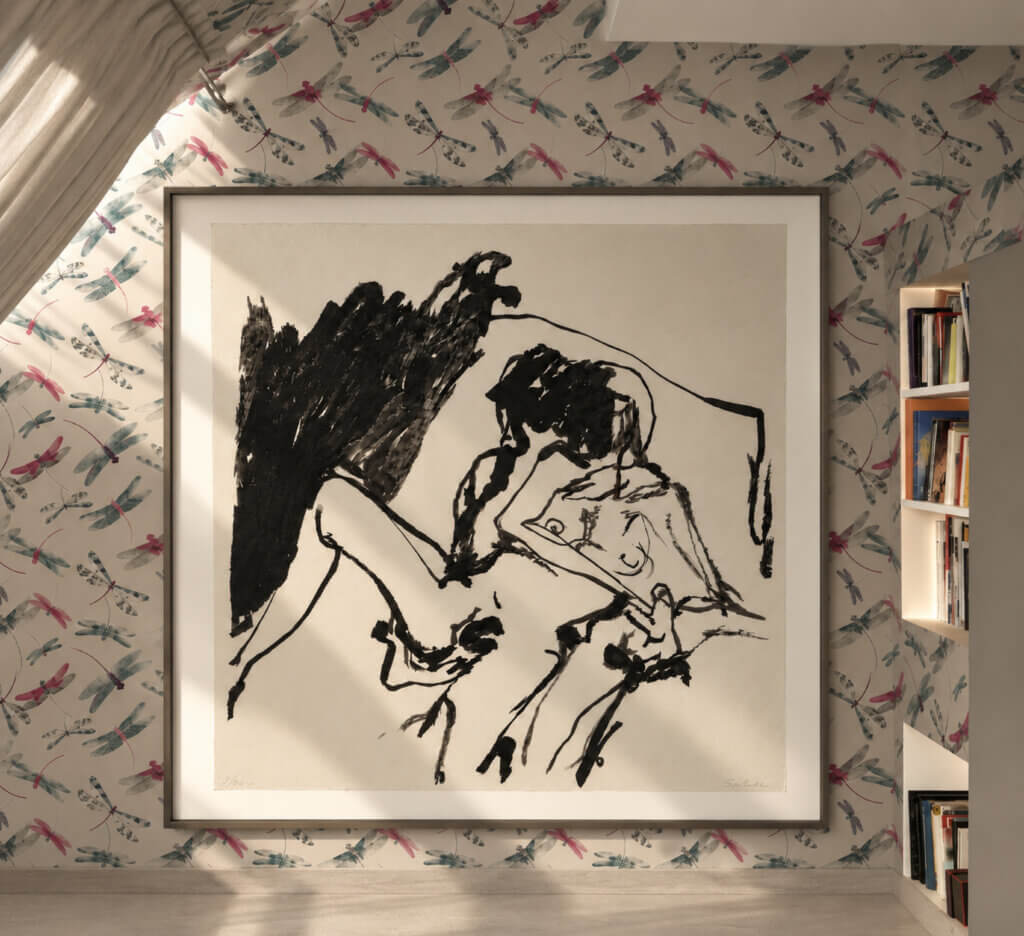
Tracy Emin "In Bed with You" 2015 © Sabine Hauswirth, 2026

SPARK: Do you have a favourite place in Vienna?


Maria Planegger: At the theatre, the opera or a concert. These places allow me to relax and give me new energy.


SPARK: If you had to part with every work in your collection and could keep only one, which would it be — and why?


Maria Planegger: The first one, the last one, and the most expensive one.

SPARK: What is your vision for the future of your collection? Is there a particular work or artistic position you would still like to acquire?

Maria Planegger: A collection is never finished. It is a process, not something complete or closed.

I am always happy to find new inspiration at art fairs and exhibitions.

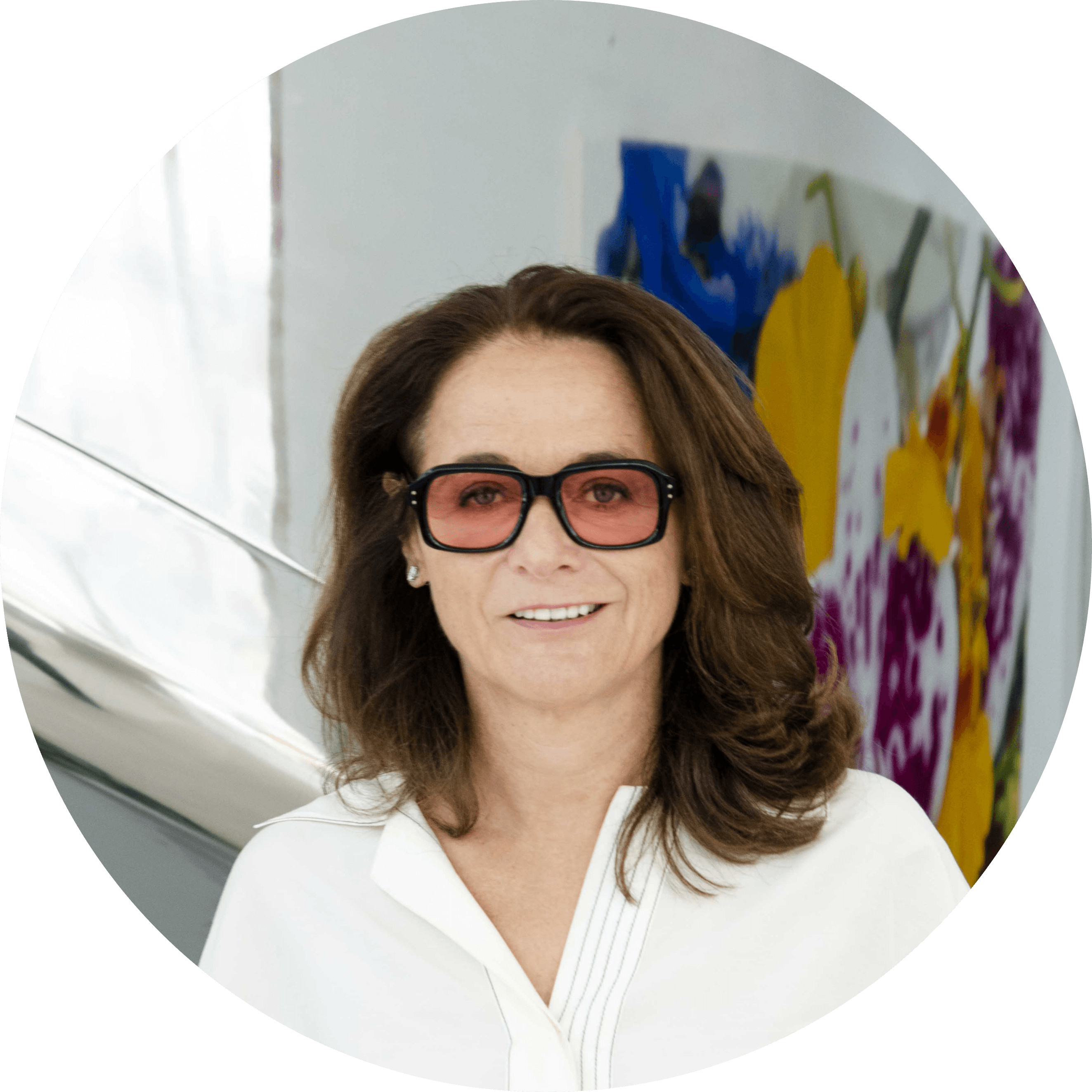
Maria Planegger

Founding Partner and Managing Partner A01 architects

Dania Kwizda-Dejanoff

International Relations SPARK Art Vienna